
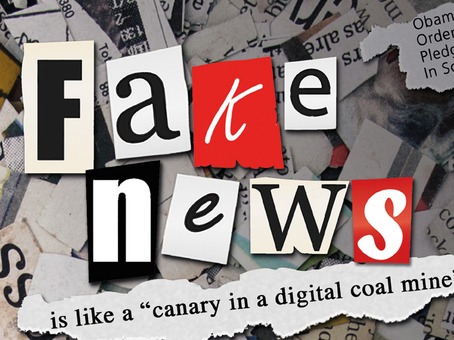

The intentional spread of fake news, masked as news in the public’s interest, has escalated over the years, advancing a hidden agenda or generating advertorial revenues. False statements have become ‘alternative facts’, and the news industry has reached a new low. Consumers can no longer trust the media, and the media should work harder to regain their trust. The Press Code of Ethics and Conduct for South African Print and Online Media, effective from 30 September 2020, describes how the media is always guided by the public interest and is understood to represent information of legitimate interest or importance to citizens.
This statement implies that the content of news reports should be in the broader public’s interest. It includes impartiality, objectivity, balance, truthfulness, and accuracy in news reporting. It also means that both sides of the story should be presented so the news consumer can draw their own conclusions. At its core, media ethics concerns journalists’ responsibilities in news reporting. It requires news reporters to think critically and develop a deeper understanding of ethical principles. They should verify facts and ensure the credibility of their sources, as the integrity of the news report is at stake.
A journalist’s primary duty is to seek the truth. Crucially, a news reporter should maintain professional distance from the story or the news informant. The media wields a significant influence on public perception. It can shape the way news consumers react, influence individual perspectives and beliefs, or enhance a person’s knowledge. It can also bolster or dismantle an existing belief.
CASE STUDY: Unveiling the Perils of Disinformation: The KwaSizabantu Mission – A News24 Reportage
The Christian Organisation, KwaSizabantu Mission, has been on the receiving end of smear campaigns with private agendas more than once, resulting in media onslaughts. News24’s coverage of the Mission is an excellent case study for exposing the perils of disinformation. Because News24 is the most significant newspaper in our country, we will focus on News24, but reference others as well. The most apparent tactic News24 used to destroy the Mission’s reputation was labelling. In short, the Mission was labelled as a cult.
The late founder, Rev Erlo Stegen, was labelled as a cult leader. However, no unquestionable evidence was provided of any of the serious allegations News24 published about the Mission and its founder. The media repeatedly used the same labels across different outlets to influence its readers, which is a red flag. However, the investigative magazine, Noseweek, suggested that News24’s editor-in-chief had an agenda in his coverage of the allegations due to the extraordinary news reports on the Mission and the repeated stories.
SOURCES:
1. Devoted Online Magazine: https://www.devotedmag.co.za?
2. A JOURNEY TO THE TRUTH: The case of KwaSizabantu Mission: Potgieter, Gerda: 9780639797038: Amazon.com: Books: https://www.amazon.com/JOURNEY-TRUTH-case-KwaSizabantu-Mission/dp/0639797032